How to Convert 12, 14, 16, 18, 20, 24, 32 oz to Cups: Ultimate Guide with Tips
☕ How Many Ounces Are in a Cup?
📐Why Standard Conversions Don't Cut It in Food Service
Struggling to convert ounces (oz) into cups when cooking, baking, or making beverages? You're not alone! In this guide, we’ll show you how to convert 12, 14, 16, 18, 20, 24, and 32 oz into cups quickly and accurately, using a simple step-by-step process.
For many people, the math (like 12oz to cups conversion)isn't quite that simple.
In a fast-paced service environment, portioning needs to be quick, accurate, and effortless. This guides provides a quick reference to help you understand how to measure fluid ounces in cups. After reading it, you will know how much milk or syrup you need to pour into each drink.
📊1. The Core Conversion: Fluid Oz to Cups for Bulk Beverage Service
The standard conversion used in the U.S. for liquid beverages (coffee, soda, soup) is straightforward:
| Fluid Ounces (fl oz) | U.S. Cups | Commercial Application (Zidan Products) |
|---|---|---|
| 8 fl oz | 1 Cup | Espresso drinks, Small Coffee, Soup side |
| 12 fl oz | 1.5 Cups | Standard Small Coffee/Soda |
| 16 fl oz | 2 Cups | Standard Medium Coffee, Bubble Tea |
| 20 fl oz | 2.5 Cups | Standard Large/XL Drink, Large Smoothie |
| 24 fl oz | 3 Cups | Venti/XXL Cold Drinks, Large Paper Bowls |
| 32 fl oz | 4 Cups | Shared Drinks, Bulk Meal Prep Containers |
Let's wrap up with the most common ounce-to-cup conversions. Always remember this basic formula: 1 cup = 8 fluid ounces (fl oz). Keeping this in mind makes conversions much easier.

- To convert cups to ounces, multiply the number of cups by 8.
- To convert ounces to cups, divide the number of ounces by 8.
Now, let's run a quick test.
How many cups are there in 12 oz?
To find how many cups are in 12 ounces, divide the number of ounces by 8 (since 1 cup = 8 fl oz).
12 ÷ 8 = 1.5, which means 12 oz equals 1.5 cups.
In practice: measure 1 full cup + ½ cup.
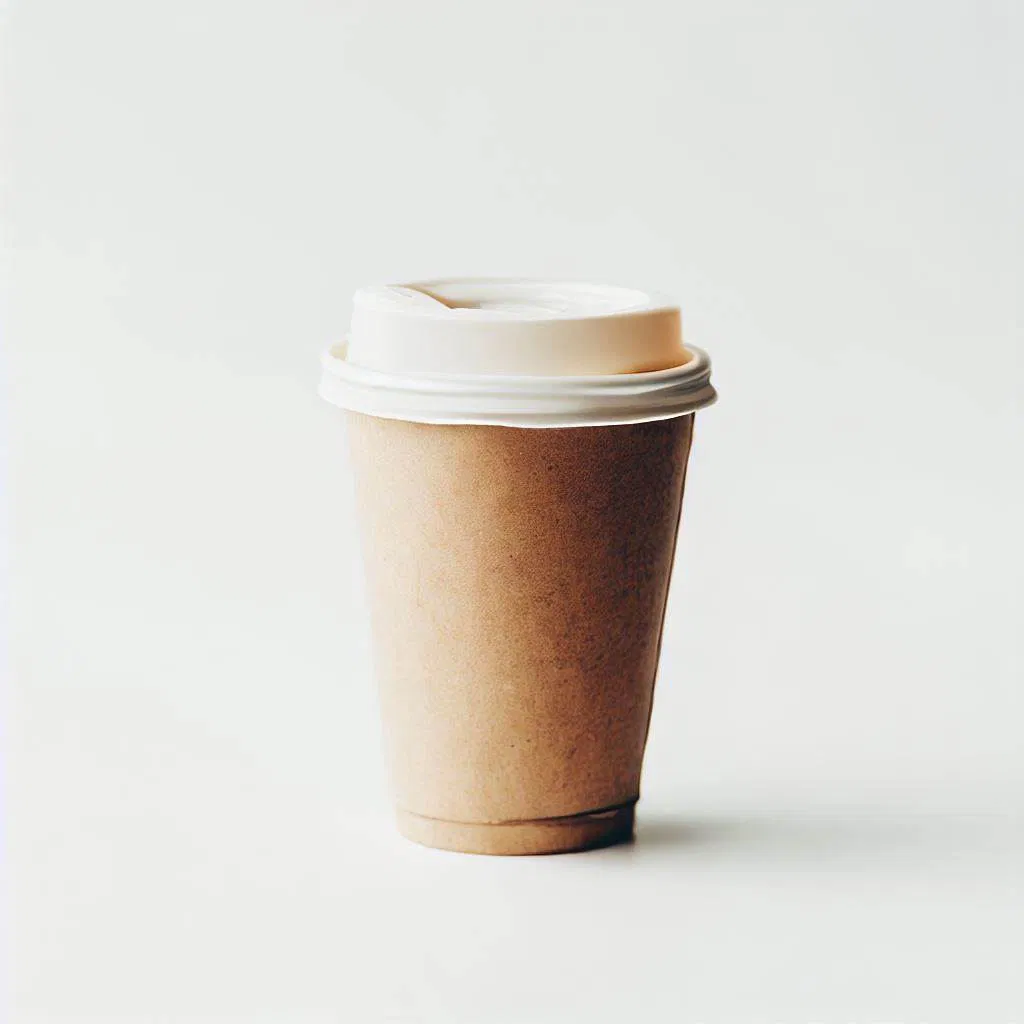
12oz equal to 1.5 cup
How many cups are there in 16 oz?
To convert 16 ounces to cups, divide 16 by 8.
16 ÷ 8 = 2, so 16 oz equals 2 cups.
In practice: measure 2 full cups.
How many cups are there in 18 oz?
For 18 ounces, divide the ounce amount by 8.
18 ÷ 8 = 2.25, which means 18 oz equals 2.25 cups.
In practice: measure 2 full cups + ¼ cup.
How many cups are there in 20 oz?
To calculate cups from 20 ounces, divide 20 by 8.
20 ÷ 8 = 2.5, so 20 oz equals 2.5 cups.
In practice: measure 2 full cups + ½ cup.
How many cups are there in 22 oz?
To convert 22 ounces into cups, divide by 8.
22 ÷ 8 = 2.75, meaning 22 oz equals 2.75 cups.
In practice: measure 2 full cups + ¾ cup
Important Note
In some legacy or non-standard measurement systems, a cup may be defined as 10 fluid ounces. If you are working with older recipes or region-specific standards, always confirm which measurement system is being used.
🎯2. The OEM Guide to Usable Capacity and High-Volume Profitability
Why does this matter to your business? A 16 oz paper cup is designed to hold 16 oz of liquid when filled right to the rim (the nominal volume).
In real-world service, especially in high-volume operations, you must leave headspace for the lid, froth, and safe handling.
Failing to account for this reduces profitability and increases customer complaints.
The Zidan Capacity Control Table
| Zidan Standard Cup Size | Nominal Volume (fl oz) | Typical Usable Capacity (fl oz) | Required Headspace |
|---|---|---|---|
| 12 oz | 12 fl oz | 10.5 fl oz | 1.5 fl oz |
| 16 oz | 16 fl oz | 14.5 fl oz | 1.5 fl oz |
| 20 oz | 20 fl oz | 18.0 fl oz | 2.0 fl oz |
Zidan Expert Tip
Always measure your actual usable capacity when setting menu prices. If your 16 oz cup only safely holds 14.5 oz of product, you must calculate your ingredient cost based on 14.5 oz, not 16 oz, to protect your profit margin across thousands of daily transactions.
Building Trust: Our Manufacturing Standards for Capacity Consistency
At Zidan Packaging, we rigorously test the volume of every batch against Industry Standard Deviation protocols to ensure consistency across your entire supply chain.
This commitment reduces product waste and protects your brand reputation across all your locations.
⚖️3. Dry Ounces vs. Fluid Ounces: Bulk Packaging Differentiation
While 8 fl oz always equals 1 cup for liquid, the conversion is different for dry ingredients and food products. This distinction is crucial for optimizing paper bowls and food boxes (like burger or sushi boxes) used in meal kits or catering.
The weight of dry ounces in a cup depends entirely on the density of the product.
- Fluid Ounces (fl oz): Measures Volume (e.g., water, coffee, soda). 8 fl oz = 1 cup.
- Dry Ounces (oz): Measures Weight (e.g., flour, sugar, dry pasta, powders).
| Dry Product Example (Approximate) | Dry Ounces (oz) in 1 Cup | Relevant Zidan Product Application |
|---|---|---|
| All-Purpose Flour | 4.4 oz | Paper Food Trays, Burger Boxes (by weight) |
| Granulated Sugar | 7.0 oz | Snack Cups, Paper Bowls (for ingredients) |
| Oats | 3.0 oz | Breakfast Bowls (accurate portioning) |
Why This Matters for Your Menu
If your menu item is priced by weight (e.g., 6 oz of dry pasta salad in a paper bowl), you cannot rely on the cup's fluid ounce volume for cost calculation. You must use a scale.
❓4. Frequently Asked Questions (FAQ) for High-Volume Operators
Q: Is 8 fl oz always equal to 1 U.S. cup?
A: Yes. The US customary unit definition states that 1 U.S. cup is exactly equal to 8 fluid ounces. This is a fixed standard for volume measurement, but service practices require headspace management.
Q: How many milliliters (mL) are in a standard 16 oz paper cup?
A: There are approximately 473.18ml in a 16 fluid ounce cup (1 fl oz = 29.57 ml). Note: As a packaging expert, we advise focusing on the usable capacity (e.g., 430 ml) for customer-facing service to ensure safe transport.
Q: What is the most cost-effective size for bulk purchasing?
A: The 16 oz cup is typically the most versatile and cost-efficient size to manufacture in high volumes as it serves both medium hot and cold drinks. Partnering directly with an OEM like Zidan Packaging ensures you achieve the best pricing at the 50,000+ unit tier.
Q: Why do coffee shops have 14 oz and 18 oz cups?
A: These "non-standard" sizes are often used by large chains for menu differentiation or to strategically adjust price tiers. As a leading manufacturer, we can custom-tool every size from 8 oz up to 32 oz to meet specific brand needs.
Q: How many cups are in 32 oz?
A: 32 oz is exactly equal to 4 cups. Simply divide the number of ounces by 8 to get the cup equivalent. We also wrote a blog about 32 oz to cups guide to better size beverage and coffee, learn more about extra large cup conversions.
Q: How can I measure 10 fluid oz without a scale?
A: To measure 10 fluid oz, you can find some tools like a cup and a tablespoon in your kitchen. 10 oz equals to one cup plus 4 tablespoons.
💡Expert Insights: Precision in High-Volume Operations
Global leaders in the QSR (Quick Service Restaurant) industry emphasize that even a 0.5 oz error in portioning, when multiplied by millions of servings, can result in millions of dollars in lost revenue and thousands of tons of preventable food waste.
Case Study 3: Global Coffee Chain Expansion
A rapidly expanding regional coffee chain partnered with Zidan Packaging to standardize their "Usable Capacity" across 50+ locations. By training staff on the exact 1.5 oz headspace requirement for their 16 oz cups, the brand reduced milk and syrup waste by 12% annually. This precision ensured that every latte tasted identical, whether purchased in Shanghai or New York, while significantly protecting their bottom line.
Case Study 4: Eco-Conscious Meal-Prep Brand
A high-volume healthy meal-prep service switched from generic containers to Zidan's precisely measured 24 oz and 32 oz paper bowls. By using our exact volume specifications to calibrate their automated filling machines, they achieved a 15% reduction in overfill waste. This accuracy not only improved their profit margins but also reinforced their sustainability mission by ensuring no resources were wasted in the production process.
Real User Feedback
"In high-volume food service, 'roughly a cup' isn't good enough. Standardizing our 12oz and 16oz fill lines with Zidan's guidance saved us over $20,000 in ingredient costs in the first quarter alone."
— Michael L., Operations Director, Metro Coffee Co.
"Switching to a manufacturer that understands the technical difference between nominal and usable volume was a game-changer for our quality control. No more leaks, no more wasted product."
— David H., Supply Chain Manager, FreshBowl Group.
📚Reference Sources & Technical Standards
1. Government & Regulatory Standards
- USDA (United States Department of Agriculture): Food Buying Guide for Child Nutrition Programs: Specifically, the "Table 12: Guide to Volume Equivalents for Liquids," which defines the standard 1 cup = 8 fl oz conversion.
- NIST (National Institute of Standards and Technology): Handbook 133 – Checking the Net Contents of Packaged Goods: Chapter 3 provides the legal "to deliver" vs. "to contain" volumetric test procedures used in manufacturing quality control.
- FDA (U.S. Food and Drug Administration): 21 CFR 101.105: Federal regulations regarding the declaration of net quantity of contents on food packaging.
2. Industry & Manufacturing Guidelines
- ASTM International: ASTM D5094: Standard Test Methods for Gross Leakage of Liquids from Containers with Threaded or Lug-Style Closures (relevant for cup lid integrity).
- Specialty Coffee Association (SCA): Standard Beverage Volume Guidelines: Technical requirements for headspace and foam depth that influence usable capacity.
- Kimecopak: How Many Ounces Is A Cup? Complete Guide for Accurate Measurements in Cooking & Baking
3. Culinary & Food Science Technical Data
- Exploratorium Food Science Lab: Data on liquid-to-weight equivalents and the physics of meniscus measurement in opaque vs. clear containers.
- MTPak & WebstaurantStore Engineering Guides: Industrial data comparing "Flush Fill" (nominal) vs. "Practical Fill" (usable) volumes for commercial 12oz, 16oz, and 24oz disposable drinkware.
How we use these references at Zidan Packaging:
As an OEM, we translate these theoretical standards into Practical Manufacturing Tolerance. For example, while the USDA defines a cup as 8 oz, we use NIST Handbook 133 protocols to ensure that our high-speed production lines maintain a volume variance of less than 2% across millions of units.
Expertise That Puts Profit First
Accurate conversion is the foundation of accurate pricing and quality control. At Zidan Packaging, we don't just supply containers—we supply the expertise to ensure you optimize your costs, eliminate the common service errors caused by misunderstood volumes, and maintain consistency across your high-volume enterprise.
Ready to talk about custom sizing and guaranteed capacity consistency for your brand?